

Couldn't load pickup availability
In 1304, Batiste Cambrai first mastered the secret art of weaving linen “as fine and delicate as a spider’s web.” His weavers, known as mulquiniers, worked in the humid cellars of their homes in Northern France, where moisture helped soften the linen thread. When crafting handkerchiefs, they would even moisten the thread between their lips to improve pliability—giving rise to the term Fil de Bouche, or “Thread of the Mouth.”
By the 18th century, this tradition began to vanish as industrial cotton production took over. Though Fil de Bouche pieces occasionally appeared at 19th-century World’s Fairs, they had become rare and costly luxuries. By the early 20th century, the workshops were gone, and the knowledge behind this remarkable technique had all but disappeared.
Simonnot Godard discovered a small archive of original Fil de Bouche pocket squares, hand-woven in 1906 by traditional mulquiniers. Preserved for over a century, these are among the finest linens ever produced—finer even than Simonnot Godard’s current offerings.
These museum-quality pocket squares are true sartorial treasures—once-in-a-lifetime pieces that will never be made again.

Adding a touch of color and sophistication to any ensemble is effortlessly achieved with a luxury pocket square. This small accessory packs a powerful style punch, instantly elevating your look. With a range of patterns, fabrics, and colors to choose from, you can effortlessly express your personal style and make a statement. Embrace the art of accessorizing and complete your outfit with a luxurious pocket square, the perfect finishing touch for the well-dressed gentleman.


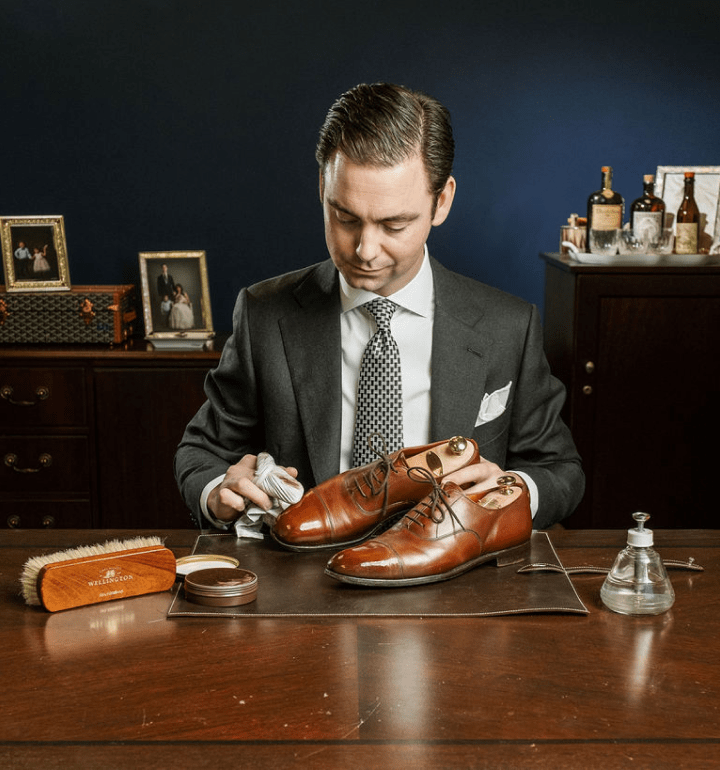
Although Kirby Allison travels the world to source product and film videos, we are based here in Dallas, Texas. Our warehouse is open to the public. Feel free to stop by anytime to pick up an order, chat with Kirby Allison, or ask any shoe care questions.